
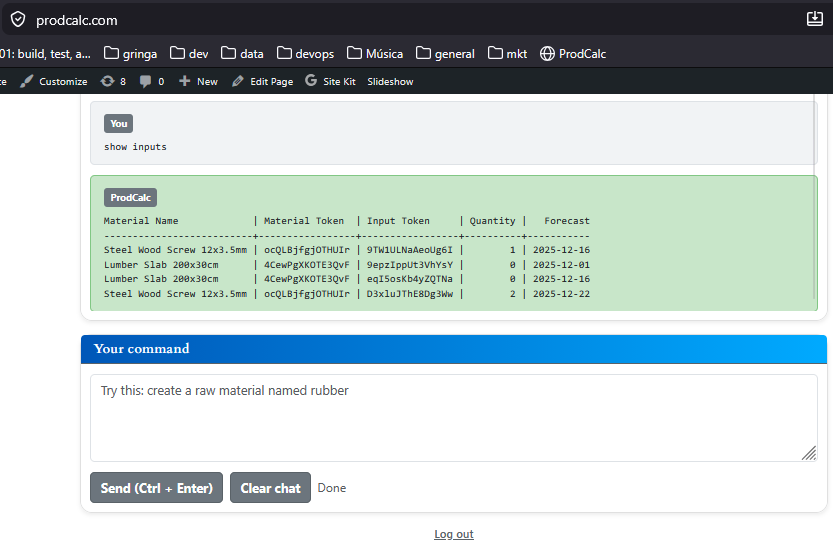
Every manufacturing company needs to know how much inventory is expected to arrive and when it will become available.
Without this information, production planning and material shortage calculations can be inaccurate because the company only sees what is currently in stock, not what is already planned to arrive.
An Input Forecast is the synthesis of all expected material inflows into the company. ProdCalc combines different possibilities of incoming inventory into a single forecast that represents how materials are expected to enter the company over time.
What is an Input Forecast?
An Input Forecast represents the expected quantity of a material that will enter inventory in the future.
It answers two important questions:
- How much material is expected to arrive?
- When is it expected to arrive?
The Input Forecast provides a future view of inventory availability, helping manufacturers understand whether they will have enough materials when production needs them.
The Input Forecast Is the Synthesis of All Incoming Possibilities
Materials can enter a company through different sources.
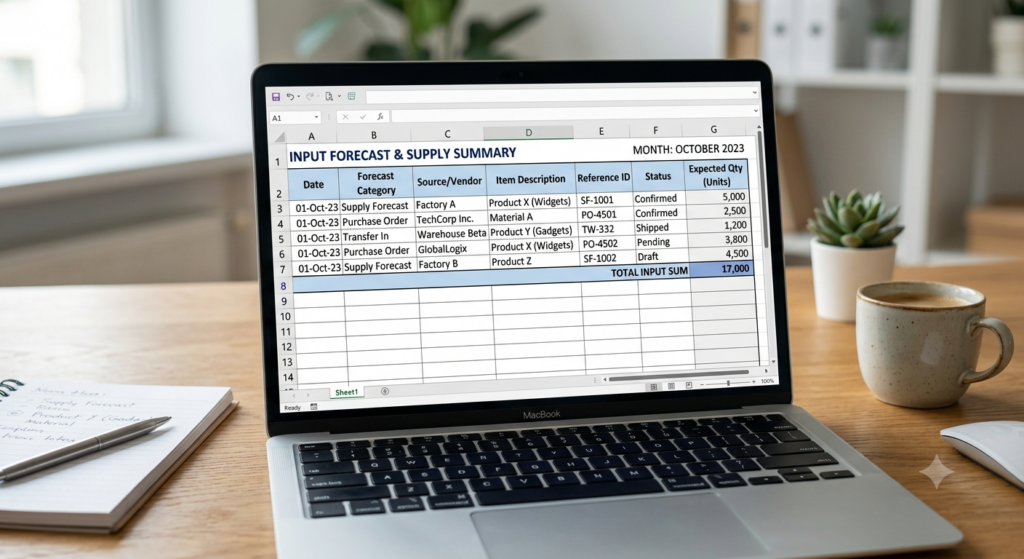
Instead of analyzing each source separately, ProdCalc combines all expected incoming movements into one Input Forecast.
The Input Forecast can include:
- Supply forecasts
- Purchase orders
- Transfers from other company locations
All these possibilities are synthesized into a single view:
Supply Forecast
↓
Purchase Orders
↓
Transfers Between Locations
↓
Input Forecast
↓
Material Shortage Calculation
Example: Incoming Materials for Production
Imagine a company that manufactures wooden chairs.
The company needs Wood Panels to produce chairs.
Future expected arrivals:
| Source | Date | Quantity |
|---|---|---|
| Supply Forecast | July 20 | 200 |
| Purchase Order #105 | July 22 | 150 |
| Transfer from Warehouse B | July 24 | 100 |
ProdCalc combines these expected receipts:
Total expected input: 450 Wood Panels
Instead of checking multiple spreadsheets or systems, the production planner sees one complete forecast of future material availability.
How Input Forecast Affects Material Shortages
Material shortages depend on the relationship between:
- Current inventory
- Expected incoming materials (Input Forecast)
- Expected outgoing materials (Output Forecast)
A material that appears unavailable today may not be a real shortage if enough inventory is expected to arrive before production needs it.
Example
Current inventory:
- Steel Sheet: 50 units
Production requirement:
- 120 units
Expected input:
- Purchase Order arriving next week: 80 units
Calculation:
Current inventory:        50
Expected input:          +80
Available quantity:      130
Production requirement: -120
Remaining inventory:      10
The shortage disappears because the Input Forecast provides visibility of future inventory.
Reducing an Input Forecast
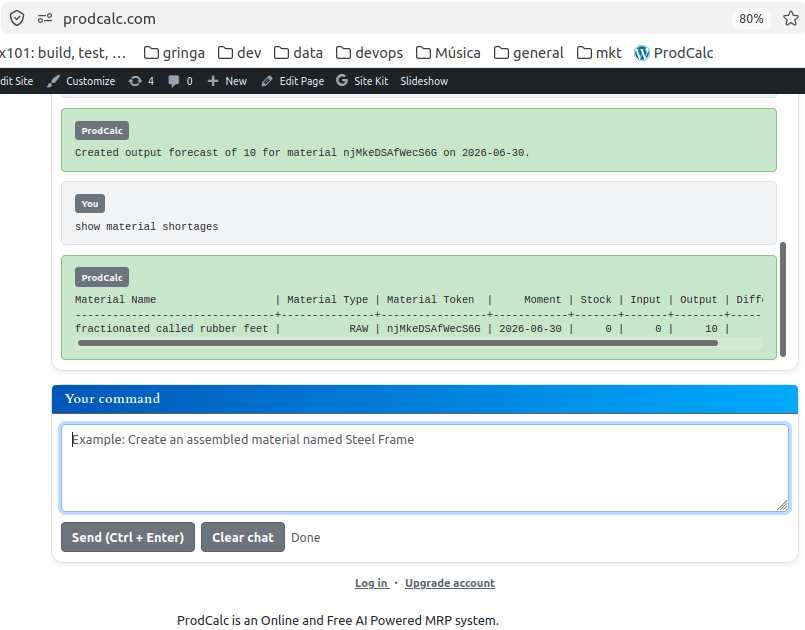
As expected receipts become reality, the Input Forecast can be reduced.
Reducing an Input Forecast means that part or all of the planned incoming quantity has already entered inventory.
For example:
Planned Input Forecast:
- 500 Rubber Feet arriving from supplier
Actual delivery received:
- 500 Rubber Feet
The forecast is reduced because the expected event has become an actual inventory movement.
Inventory Movements Created From Input Forecasts
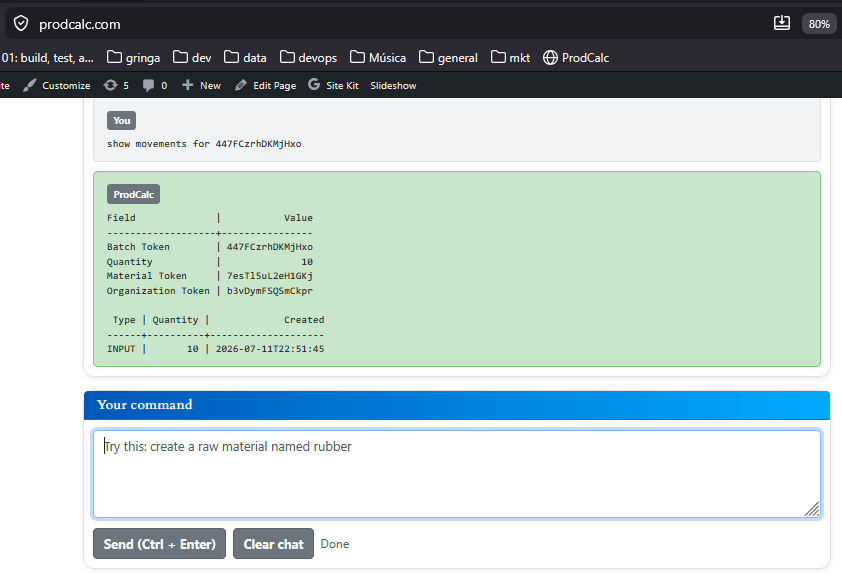
When an Input Forecast is reduced, ProdCalc records the corresponding inventory change.
Depending on the situation:
- The quantity can be added to an existing batch.
- A new batch can be created for the incoming material.
This keeps forecasts synchronized with actual inventory.
Example: Purchase Receipt
Input Forecast:
- Material: Rubber Feet
- Quantity: 500
- Expected date: August 10
Supplier delivery arrives.
The Input Forecast is reduced:
Before:
Input Forecast:
Rubber Feet +500
After receiving:
Inventory Batch RF-2026-0810
Rubber Feet +500

Input Forecast:
Rubber Feet 0
The planned receipt has become actual inventory.
Benefits of Input Forecast
Using Input Forecast allows manufacturers to:
✅ Know when materials will become available.
✅ Predict future inventory levels.
✅ Reduce unnecessary purchasing.
✅ Prevent unexpected production interruptions.
✅ Improve material shortage calculations.
✅ Maintain inventory traceability through batches.
Try It Yourself
Open the ProdCalc AI and type:
Create a raw material named Steel Sheet.
Then create incoming inventory forecasts:
Create an Input Forecast of 500 Steel Sheets arriving on August 5.
Create another Input Forecast of 300 Steel Sheets arriving on August 12.
Then ask:
Show the material shortages.
ProdCalc will combine:
- Current inventory
- Expected incoming materials
- Expected outgoing materials
to calculate whether production can proceed without shortages.