
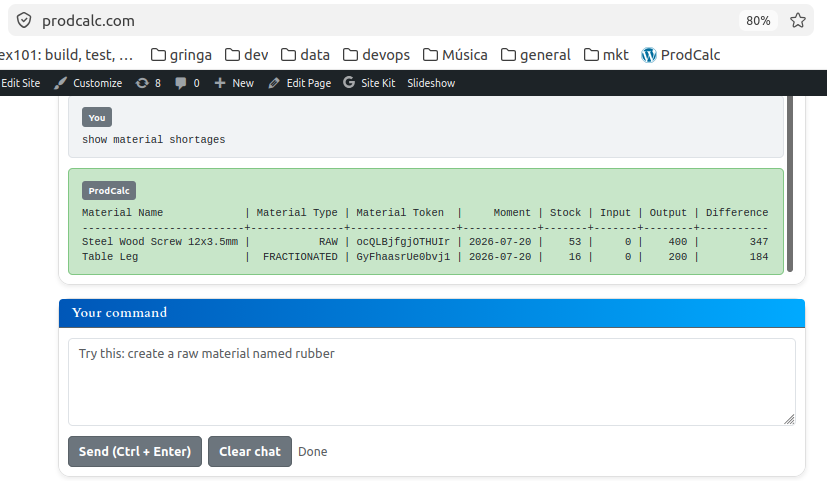
One of the main responsibilities of a production manager is ensuring that enough materials are available before production starts or customer demand must be fulfilled.
The Material Shortages Report helps accomplish this by identifying future inventory shortages before they become operational problems.
What Is the Material Shortages Report?
The Material Shortages Report analyzes all planned material movements and shows which materials will not have sufficient inventory, when the shortage will happen, and how much material will be missing.
Rather than discovering shortages after production stops, the report allows planners to identify problems in advance and take corrective action.
What Causes Material Shortages?
Material shortages occur whenever future demand exceeds the expected supply of a material.
The two main activities that affect future inventory are:
- Output Forecasts, which reserve inventory for expected customer demand.
- Production Orders, which consume components and create new batches of manufactured materials.
Whenever these planned activities result in insufficient inventory, the Material Shortages Report identifies the affected materials and the dates when shortages will occur.
Example
Current inventory:
- Steel Sheets: 500 kg
Future plans:
- Output Forecast: 300 kg on July 10
- Production Order consuming 350 kg of Steel Sheets on July 12
Total planned consumption:
650 kg
Available inventory:
500 kg
The Material Shortages Report will show:
- Material: Steel Sheets
- Date: July 12
- Shortage: 150 kg
How Production Orders Affect Material Shortages
Production Orders can affect the Material Shortages Report in two different ways.
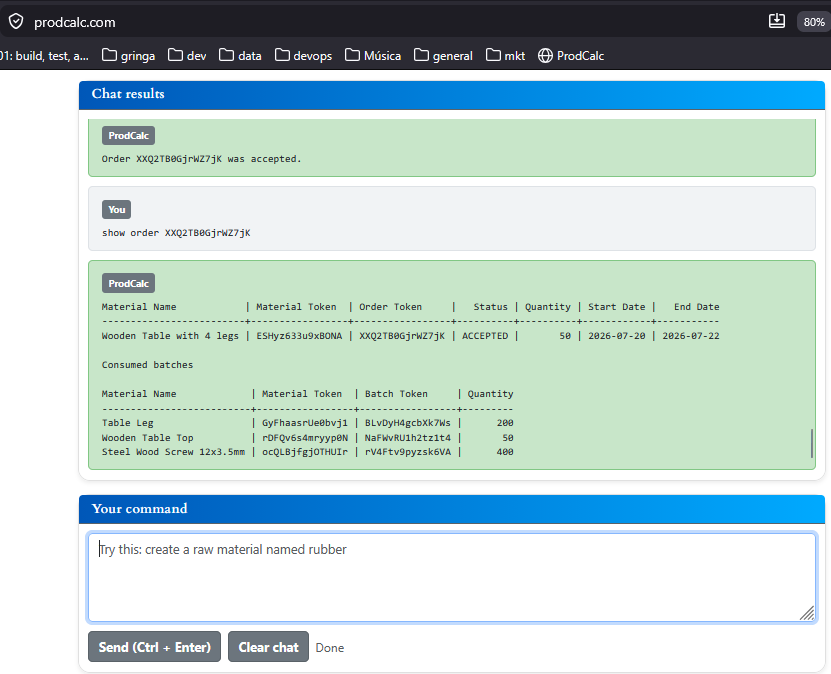
When a Production Order is accepted, it immediately consumes batches of its component materials. If those components are not available in sufficient quantities, new shortages may appear.
When a Production Order is delivered, it creates a new batch of the produced material. This additional inventory may eliminate existing shortages for that material or prevent future shortages from occurring.
Because Production Orders both consume and create inventory, they play a central role in balancing material availability throughout the production process.
Example
A company manufactures Wooden Chairs.
Accepting a Production Order consumes:
- 4 Wooden Legs
- 1 Seat Panel
- 1 Backrest
- 16 Screws
- 4 Rubber Feet
These consumptions may create shortages for any of the components.
After production is completed, the order is delivered and creates a new batch of Wooden Chairs, increasing the inventory of finished products and potentially eliminating shortages for customer demand.
Solving Material Shortages
Finding shortages is only the first step.
The production manager must analyze the report and make tactical and logistical decisions to ensure production and customer deliveries can continue without interruption.
Common solutions include:
1. Decrease the Output Forecast
If customer demand has been overestimated or deliveries can be postponed, reducing the Output Forecast immediately decreases future material consumption.
Example
Instead of shipping 500 chairs, the company decides to ship 400 chairs next week.
The required wood, screws, and paint are reduced accordingly.
2. Increase the Input Forecast
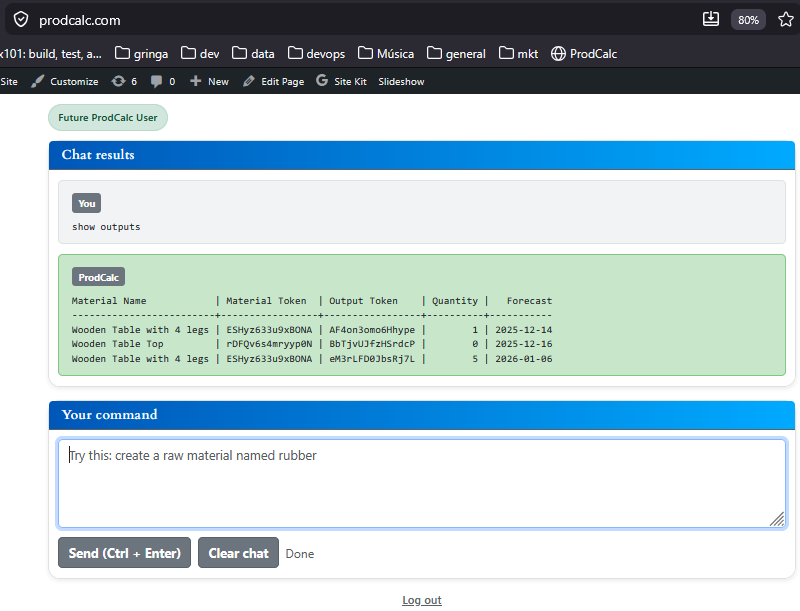
If additional raw materials can be purchased or transferred from another warehouse, increasing the Input Forecast adds future inventory and eliminates shortages.
Example
Purchase an additional 200 kg of Steel Sheets scheduled to arrive before production begins.
3. Create Production Orders
If the missing material is manufactured internally, creating Production Orders increases the future inventory of that material.
However, before creating a Production Order, the production manager should verify that all required component materials are available, since accepting the order will consume those batches and may create shortages for its components.
Example
The company has a shortage of Wooden Chairs.
The planner creates a Production Order to manufacture 100 Wooden Chairs.
The order consumes wood, screws, and rubber feet, but after it is delivered, a new batch of 100 Wooden Chairs is added to inventory, eliminating the shortage of finished products.
Why This Report Is Important
Without visibility into future shortages, manufacturers often discover problems only after production stops or customer deliveries are delayed.
The Material Shortages Report transforms production planning from reactive to proactive by identifying inventory problems before they occur.
When shortages are resolved in advance, purchasing, production, and logistics can work together to keep manufacturing running smoothly.
When No Material Shortages Exist
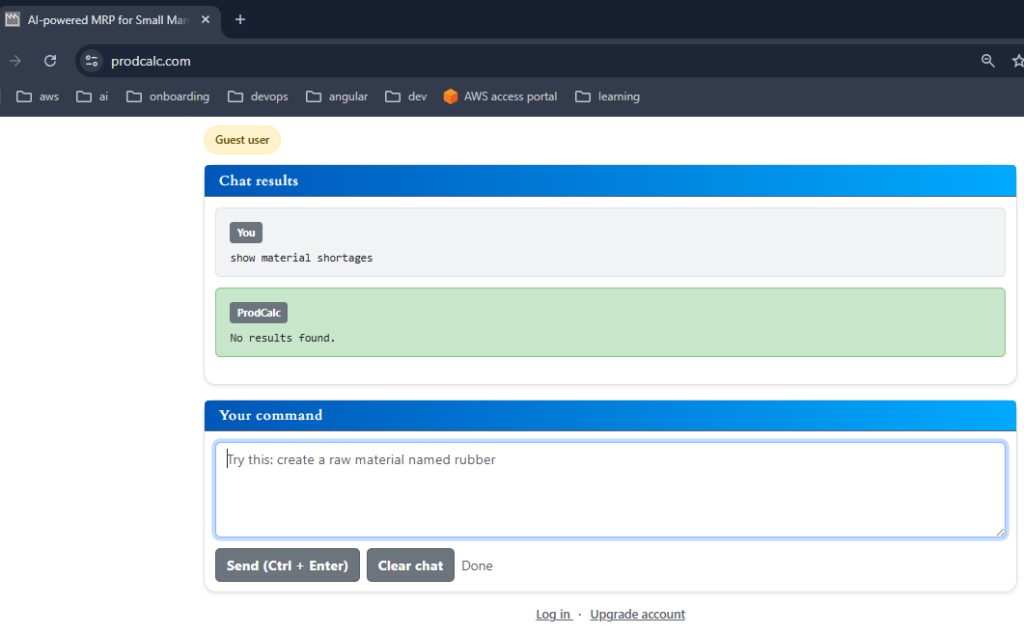
When the Material Shortages Report contains no shortages, all planned customer demand and production activities have sufficient material supply.
This means that, based on the current plans:
- Planned customer demand can be fulfilled.
- Production Orders have enough component materials.
- Production Orders will create the required finished-material batches.
- Future inventory levels remain sufficient.
- The production process is expected to have all the materials necessary to manufacture and ship products on time.
Although unexpected events may still occur, eliminating planned shortages greatly reduces the risk of production interruptions.
Try It Yourself
Open the ProdCalc AI and type:
Create a raw material named Steel Sheets.
Then type:
Create an Output Forecast of 800 kg for Steel Sheets next Monday.
Finally, ask:
Show the Material Shortages Report.
If there is not enough inventory to satisfy the planned demand, ProdCalc will identify the shortage, indicate when it occurs, show how much material is missing, and help you decide whether to reduce demand, increase supply, or create Production Orders to eliminate the shortage.